
Scottish Art News
Latest news
Magazine
News & Press
Publications
Joyce W. Cairns’ Personal Odyssey
By Beth Williamson, 25.08.2026
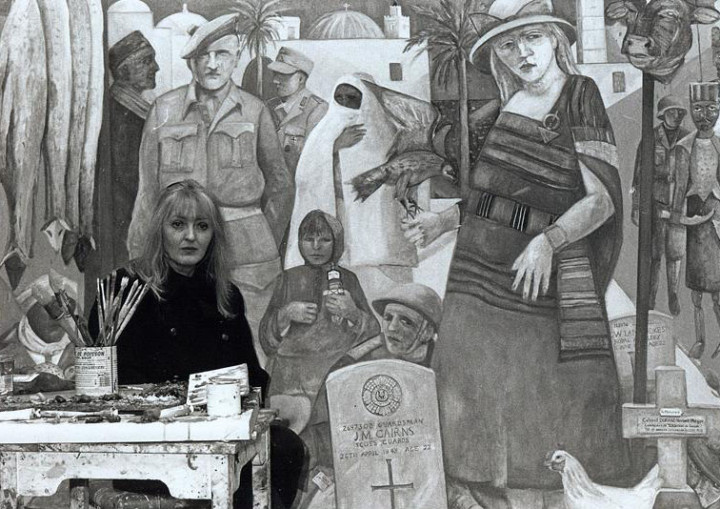
Joyce W. Cairns’ face appears in almost every work she has made, sometimes more than once. Yet, nothing is ever that simple, is it? Subjects that appear profoundly personal emerge and develop as universal themes such as love, war or politics.
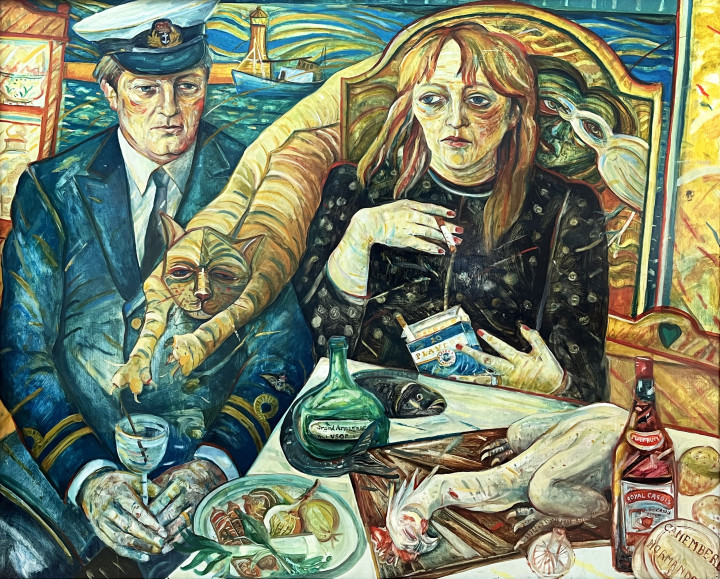 Joyce W. Cairns PPRSA. Wedding Breakfast.
In this exhibition more than a hundred paintings and prints speak to a lifelong career that has flourished from the start. Cairns’ independence of thought came to the fore as a student at the RCA where, as artist Arthur Watson notes in the exhibition’s catalogue essay, she remained committed to figuration despite the proliferation of abstraction at this time. It is precisely this sort of determination that has seen Cairns gain recognition at every stage of her creative life. While a student at Gray's School of Art in Aberdeen (1966–70) she won several awards including the Hospitalfield Prize (1969) and, later, the RSA's prestigious Carnegie Travelling Scholarship in 1971, which supported Cairns to travel around Italy. Following further training at the Royal College of Art, London and Goldsmiths College, University of London, Cairns returned to Gray's in 1976 where she taught painting and drawing until 2004. She was the first woman President of the RSA, serving from 2018 until 2022.
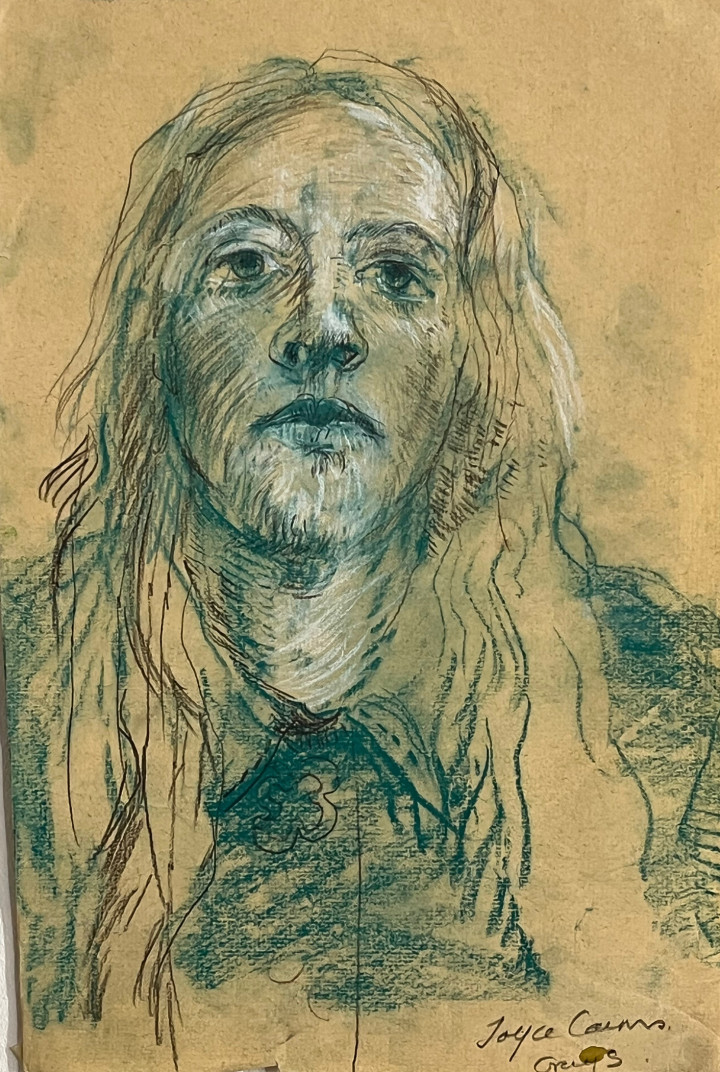 Joyce W. Cairns PPRSA. Self Portrait (1968).
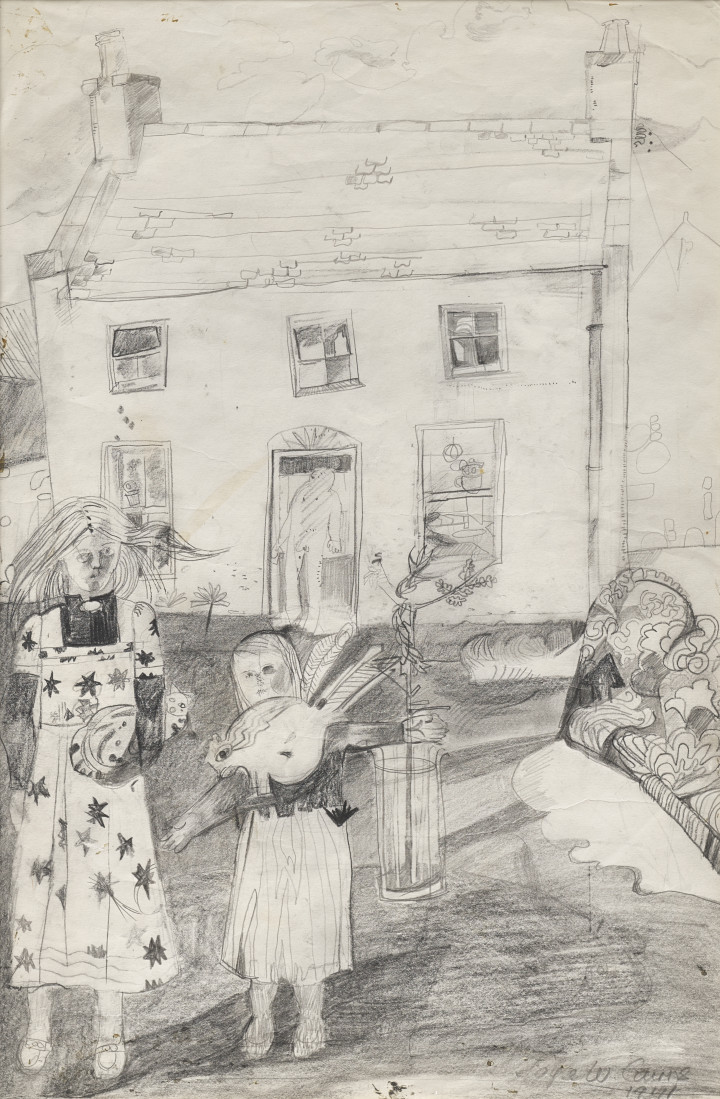 Joyce W. Cairns. The House at Skene (1971).
It was a move to the Aberdeen fishing village of Footdee in 1979 that led to a sea change in Cairns' work. With its unique geography, community and architecture, Footdee inspired pivotal paintings such as ‘The Drying Green’ (1990). As Watson observes, this work exemplifies Cairns' refinement of the painting’s visual structure, using complex angles that create a feeling of unease. These changes became de rigueur for the paintings that followed.
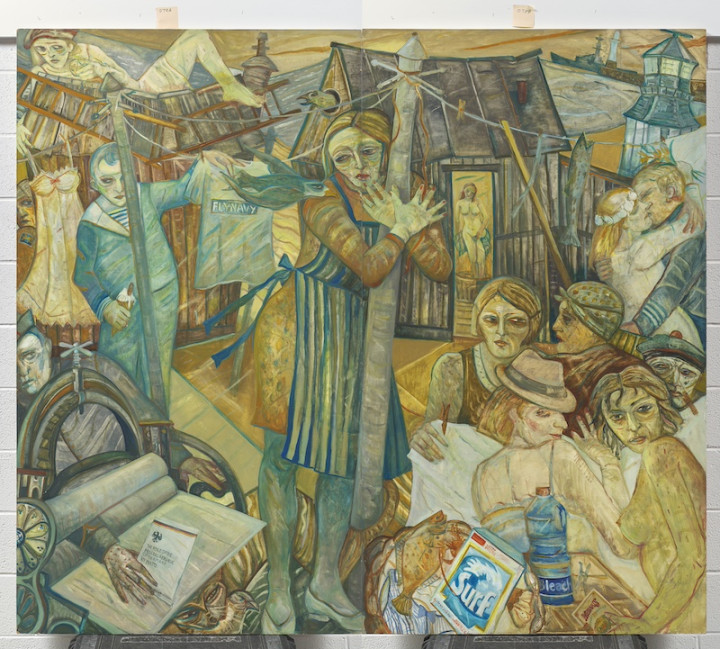 Joyce W. Cairns. The Drying Green (1991).
There is both tragedy and comedy in Cairns’ paintings. In ‘The Sea Gives Up Its Dead’ of 1986, for instance, the figure of Cairns appears to recline upon the sea's surface, as if supported by the dead including a sailor from the Lusitania (a British liner sunk in 1915) who is serving her tea. Her facility for drawing is never in question as works such as ‘Mother’ (1969/70) and ‘The Chiropractor’ (1985) amply demonstrate.
It is, however, Cairns' monumental ‘War Tourist’ project that she is best known. This mammoth undertaking in both scale and ambition arose from an intensely personal motivation to better understand her father's experience of active service in North Africa and Europe during World War Two. However, the artist's interests extended to include more recent conflicts. These epics play out with astounding intensity as Cairns' bears witness to the destruction of war. Through her paintings, we too are reminded such conflicts in paintings such as ‘The Drums of War’ (1993) and ‘Sword Beach’ (1996). It is a sobering end to an exhibition that takes us on a journey to the psychological depths of humankind and back again. When you reach the end of the exhibition, start again, because there is no doubt you will have missed something in Cairns' clever, witty, inventive world, just waiting to be discovered.
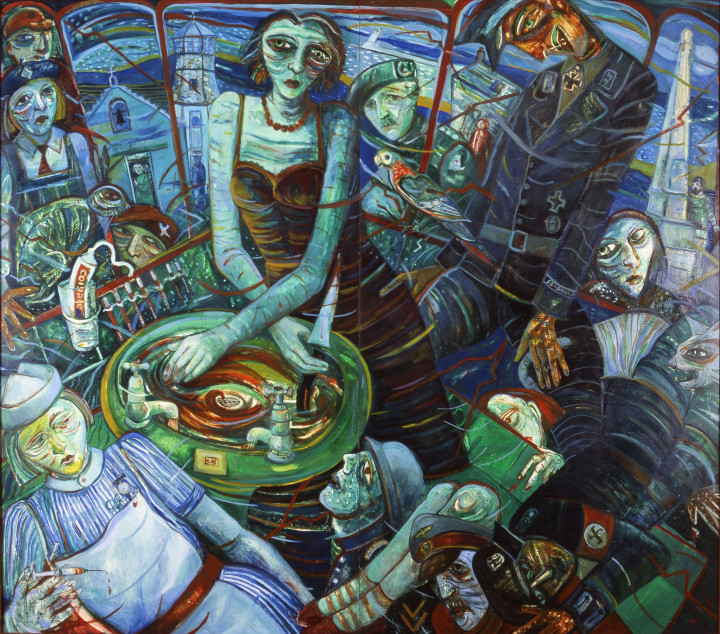 Joyce W. Cairns PPRSA. They said the War was Partly to Blame.


