
Scottish Art News
Latest news
Magazine
News & Press
Publications
Flashman: Jim Matthew’s Camera Collection
By Greg Thomas, 20.09.2026
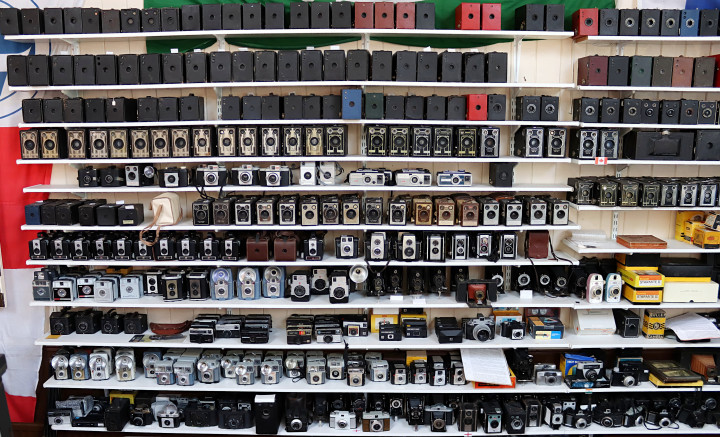
If a picture tells a thousand words, how many stories are buried in a room containing 4,000 cameras? Neville “Jim” Matthew was a naval engineer employed in the marine salvage business who amassed one of the world’s largest collections of cameras. Born in Bolton but based at different times in Canada, Hong Kong, the Netherlands, and Greece, Jim retired to the East Neuk village of St Monans, where he died in 2017, having bought an old Salvation Army Hall to store his everexpanding collection. Now the building and its contents are managed by a small team of volunteers who arrange visits from shutterbugs the world over. They are also working on new facilities such as a darkroom.
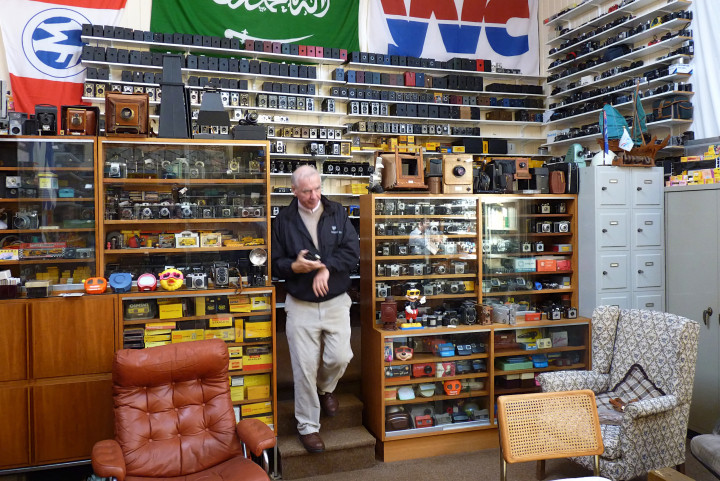 Jim 2009. Courtesy of the Jim Matthew Estate.
The Treasurer of the Jim Matthew Camera Collection, Mike Child, opens up the building on a breezy Saturday morning in Fife. “When Jim started collecting anything, he would go for it,” Mike explains – though he hardly needs to – “to the point where he sometimes had to be diverted off onto new hobbies.” This explains the flags from around the world decorate the walls, evidence of a job that took Jim across continents to strip down broken boats for working parts and materials; and the little handmade teddy-bears in one corner cabinet. Just for good measure, he also acquired over 2,500 books, “all arranged in alphabetical order by author.” Did he read them? “I’ve no idea,” Mike chuckles, “but it was useful for us to have them over Covid.”
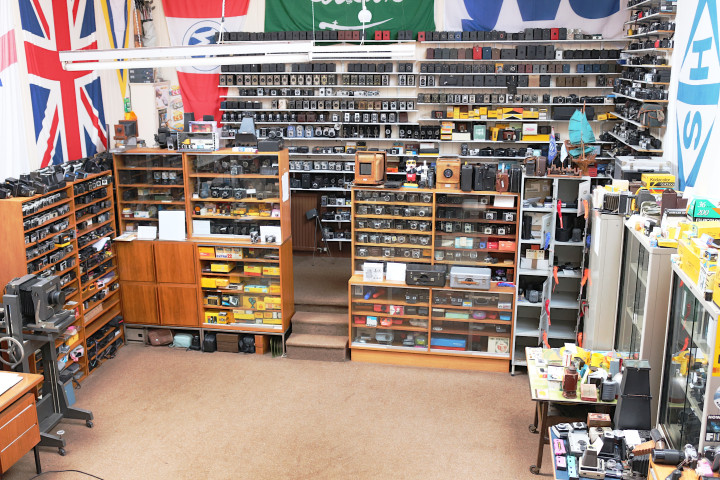 A view of the hall in 2020. Courtesy of the Jim Matthew Estate.
There are many ways of feeding a creative spirit. We might think of writing, art, or music as somehow the most legitimate, but there is creativity, too, in the act of gathering and archiving. Peggy Guggenheim and Sir John Soames are amongst historical figures whose collections formed the basis for museums or galleries. Outsider artists often create visionary, live-in environments beginning as collections of junk. Borrowing something of the spirit of both camps (he sometimes slept on a mezzanine floor in the hall, with his cameras and books) Jim acquired and arranged a vast haul of objects bound by a common thread. Their interest and value now lies partly in the very fact of their being brought together like this.
The whole history of photography is here, from late Victorian beauties with leather bellows and polished wood casing to the world’s biggest collection of Brownies, the first camera for the mass market, which cost $1 to buy when launched by Kodak in 1900. When a new edition of a camera appeared, it was acquired and stored with the last. Jim would often pick up items through contacts in the countries he visited for work. Flea-markets and second-hand shops were diligently perused.
Mike, who had a job selling equipment to the TV and film industry and lives in St Monans himself, is clearly a lover of analogue machinery. His enthusiasm for the ingenious design of many of Jim’s pieces is infectious. When I ask him to pick out a few favourite items, he goes to a camera-gun (it looks exactly how you’d imagine) created for the Russian military, as well as a miniature spy-camera. But he also chooses an Action Man figure with a lens in its belly (“Kodak were brilliant at marketing these novelty cameras”), and a model for the women’s market with one canister for film and another for lipstick.
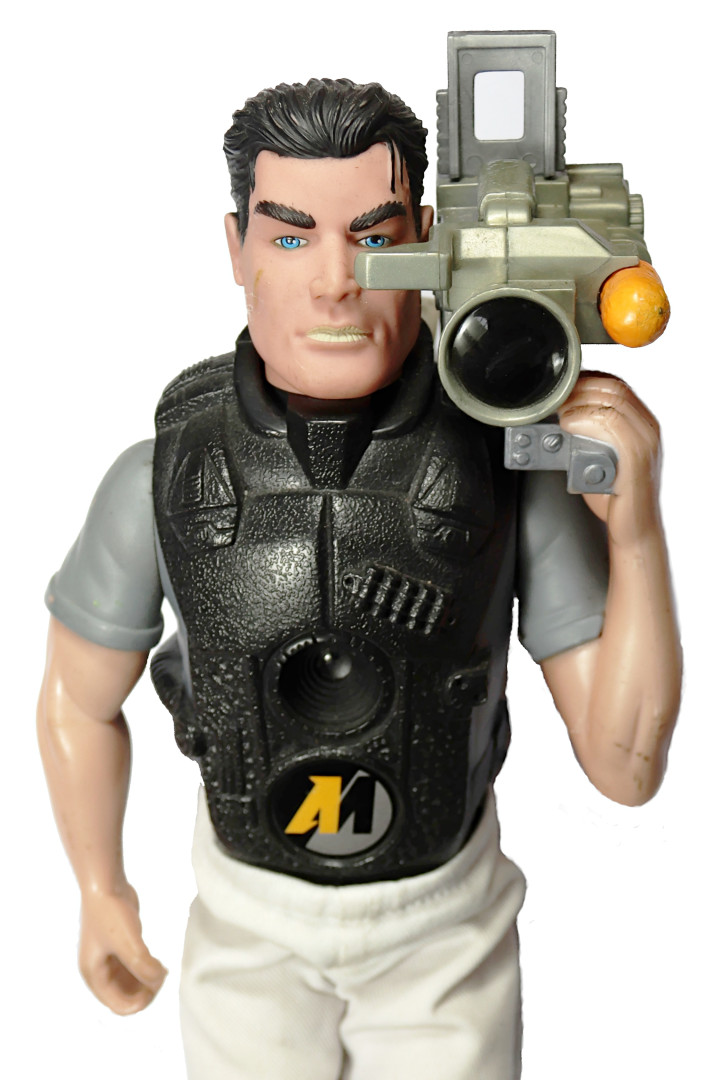 Lights, Camera, Action Man. Courtesy of the Jim Matthew Estate.
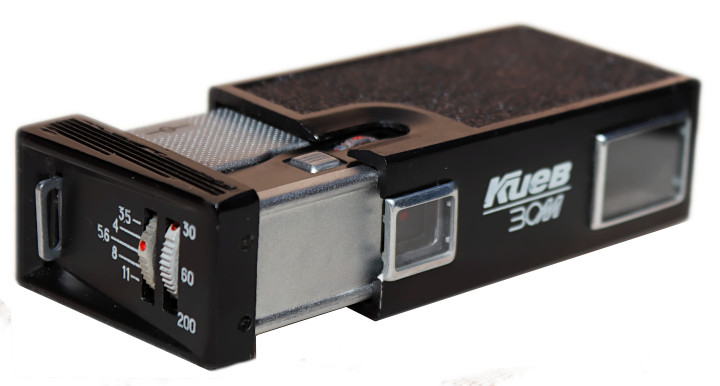 I Spy... Courtesy of the Jim Matthew Estate.
What is touching about Jim’s story is that a quarter of the 4,000 cameras here have been acquired since his death. “We don’t advertise”, Mike notes. “But people come here and see what we have, and they choose to donate their loved ones’ cameras to us, rather than sell them on the internet.” The collection is not only of great historic interest, but also a monument the eccentricity and generosity of human beings, with their desire to preserve and share their stories.


