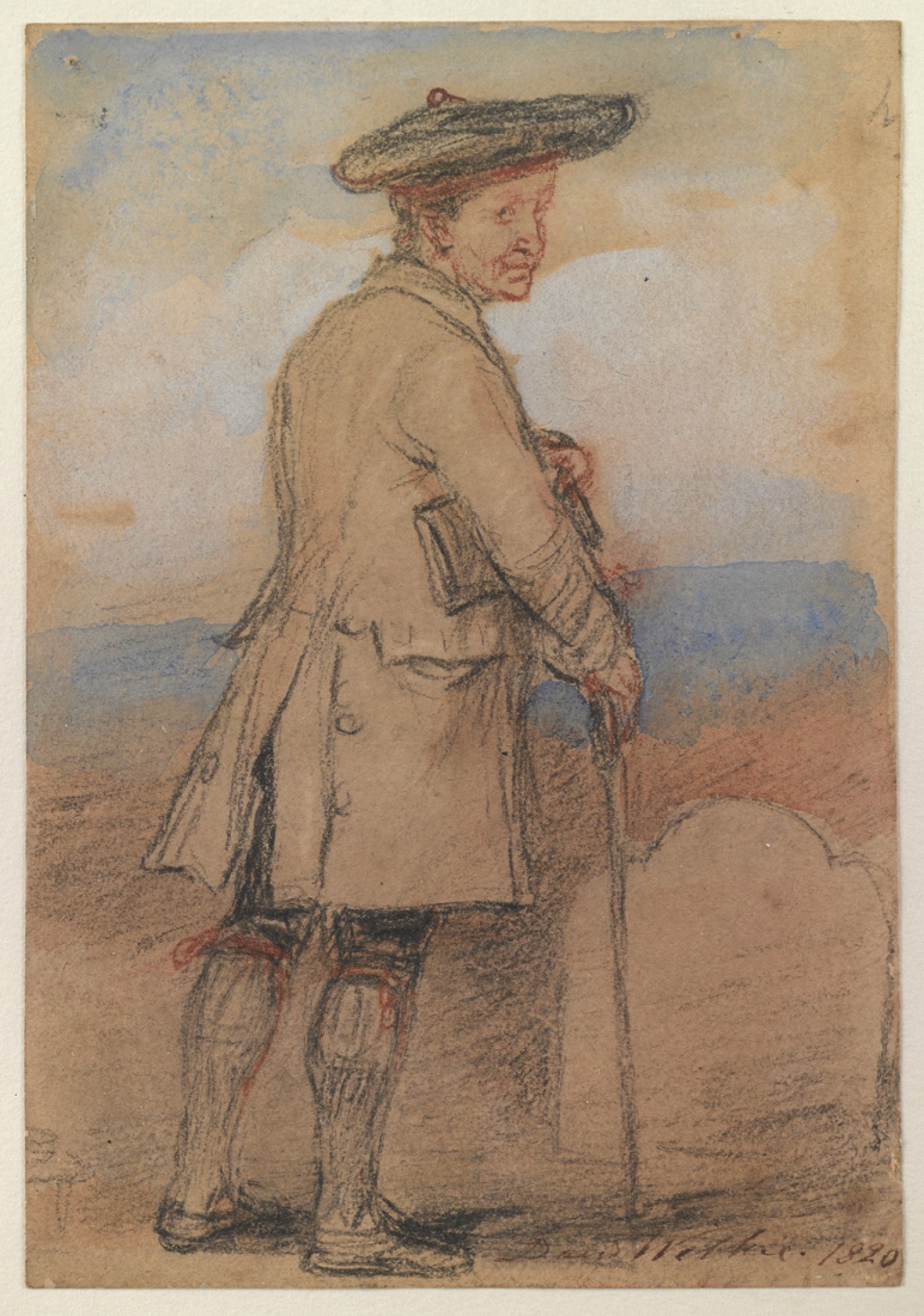
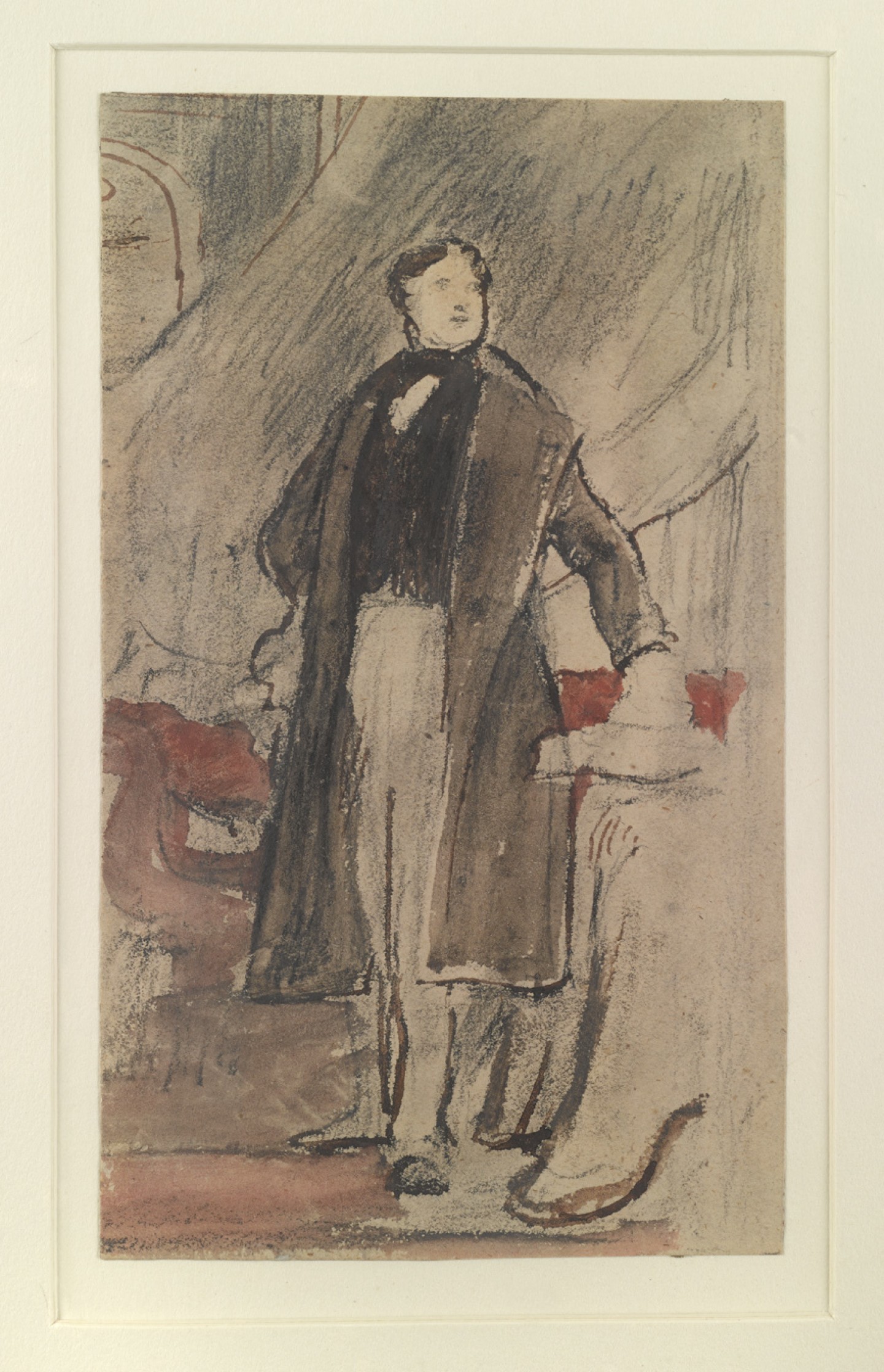
Study for Portrait of Daniel O'Connell, MP
David Wilkie


DESCRIPTION
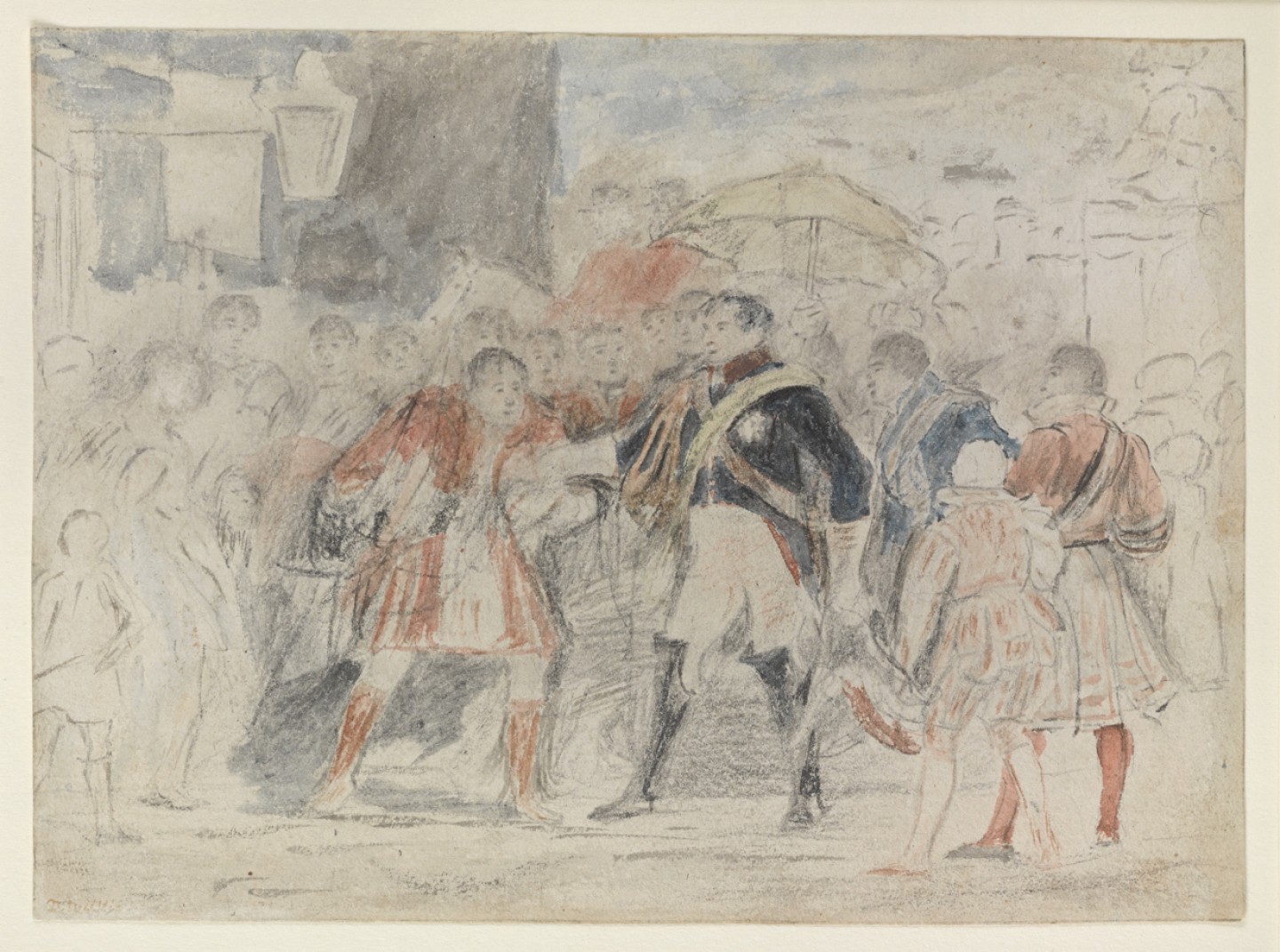
Study for Portrait of Daniel O'Connell, MP by David Wilkie (1785-1841) captures a standing male figure in outlined detail, with portions filled in with solid lines of colour. The figure looks up toward the right side of the painting, with a hand placed on the table beside him, and the body faces the viewer. Elements of the background are captured in loose outlines of linework and solid washes of red watercolour.
This work along with others marks Wilkie's shift to portraiture and depicts Daniel O'Connell, an Irish lawyer, campaigner, and founder of the National Bank of Ireland. He is popularly known as 'The Liberator' for his campaign and political work. The final portrait by Wilkie, titled Portrait of Daniel O'Connell as Governor of the National Bank, 1838 within the National Gallery of Ireland contains many of the main elements of this study, from the pose to the red colour motif.
DETAILS
-
Artist
David Wilkie
-
Date
1838
-
Medium
Watercolour on paper
-
Object number
926
-
Dimensions unframed
16 × 9 cm
-
Dimensions framed
40 × 28 × 0.75 cm
-
Subject
ARTIST PROFILE
Sir David Wilkie RA, 1785-1841
In the first three decades of the nineteenth century Sir David Wilkie stood alongside Constable and Turner as one of the three greatest British painters of the period; indeed, in his own lifetime his reputation - nationally and internationally - was as high as or higher than that of the other two. Wilkie was a pre-eminent genre painter with an exceptional gift for observation of character, his early work being in the manner of the Dutch painters Ostade and Teniers. It is no exaggeration to say that all Victorian genre painting in England and Scotland derives from Wilkie. Subsequently he turned to historical genre and, later, to portraiture. His work attracted the wildest popularity, particularly through the medium of engravings.
Born in Cults, in Fife, the third son of the parish minister, Wilkie enrolled for art classes at the Trustees' Academy in Edinburgh when he was fourteen. In 1805 he moved to London, studying at the Royal Academy Schools. The following year he exhibited The Village Politicians at The Royal Academy and became an overnight success. Thereafter his rise to fame was meteoric. When his masterpiece Chelsea Pensioners (celebrating Wellington's victory at Waterloo) was exhibited at the academy in 1822 at the astonishing price of 1200 guineas [£1260], there was such a clamour to view the painting that a crush barrier had to be erected to protect it, a previously unheard of measure.