Memories
Thomas Sword Good


DESCRIPTION
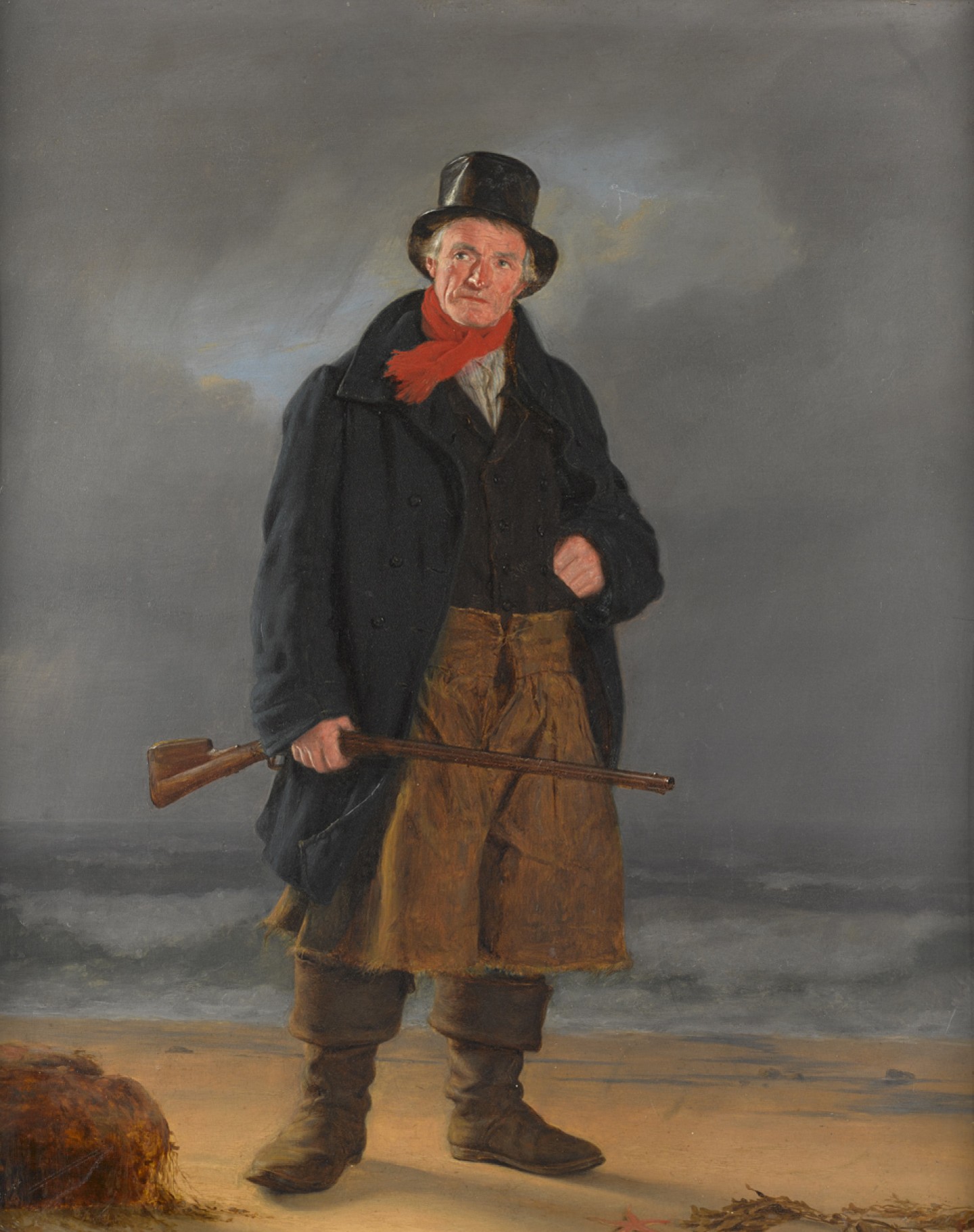
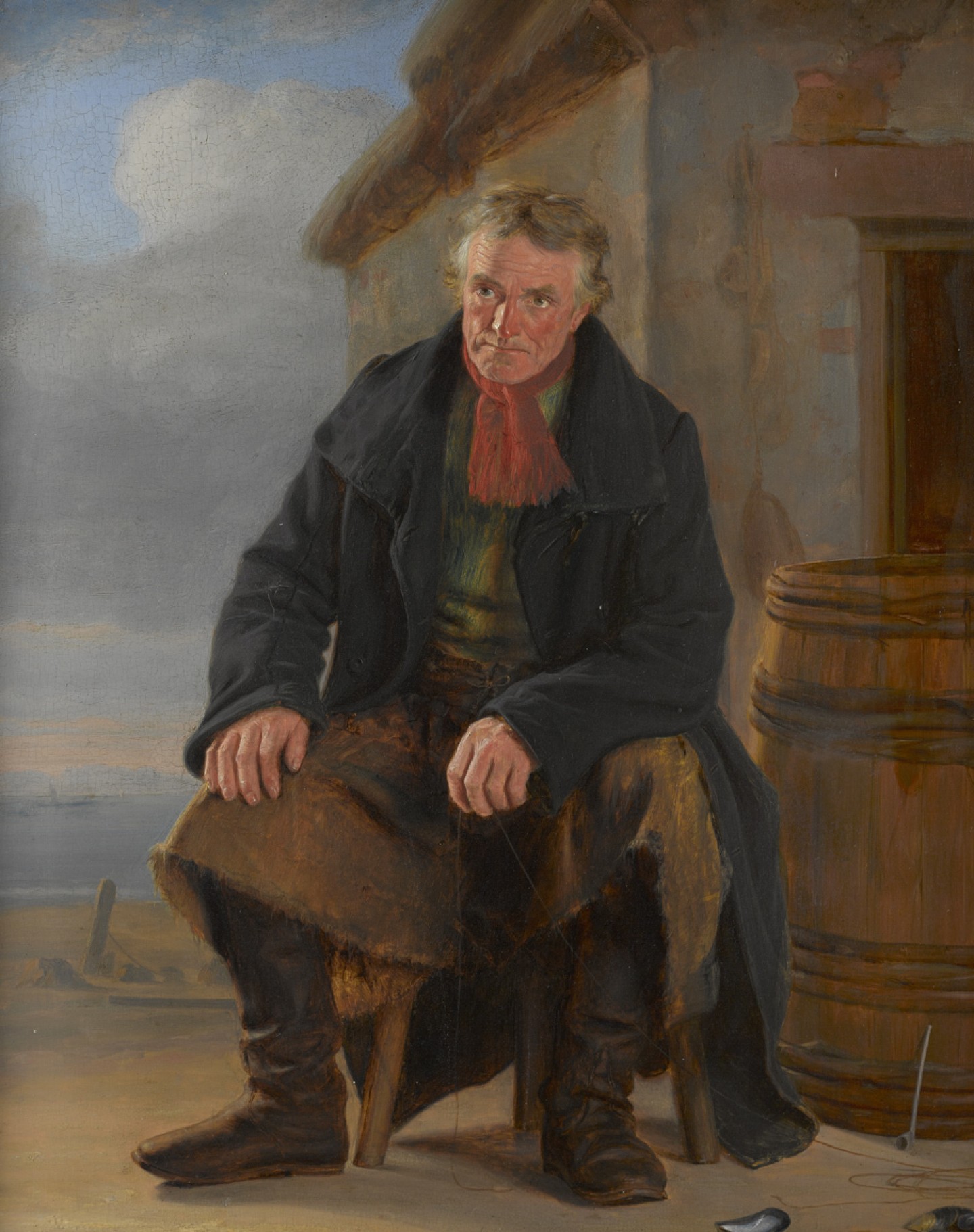
Memories by Thomas Sword Good (1789-1872) depicts a fishermen, also present in his other work A Fishermen with a Gun, Unknown, sitting on a stool outside a stone house along the coastline, looking out towards the left of the work. The man is dressed in brown boots, tan trousers, a green shirt, with a red scarf tied around his neck and a dark black, long coat. Good captures the man's face in realistic detail, with fine lines of paint strokes capturing the wrinkles of his face and the hair of his brows. The blending of colour shows Good's mastery in capturing the life of his figures, adding to the sense of looking at someone's living image. These fine details are present in other parts of the work, such as the shading of the coat with the mastery of light and dark and a similar effect in the wrinkling of the boots. The background contrasts this as Good captured it in softer strokes of paint and less focus on small variations in colour to capture life and depth.
Good places the man in relation to specific objects to indicate the man's status as a fishermen, with him holding fishing line up in this hand and oyster shells near the bottom edge of the painting. An interesting contrast to the typical use of fishermen at the time is the presence of the white long-stemmed pipe against the barrel, since fishermen more commonly preferred short-stemmed pipes to be able to use both of their hands in their work, suggesting this man is also leisurely and perhaps not working directly on a boat anymore. Good was a well known portrait painter and it was commonplace that his subjects were of people from the fishing community of Berwickshire, where this man is likely from. The title of this work possibly speaks to the sitter's expression and looking away from the viewer, showing the fishermen to be contemplative and possibly lost in the thought of a memory.
DETAILS
-
Artist
Thomas Sword Good
-
Date
Unknown
-
Medium
Oil on board
-
Object number
382
-
Dimensions unframed
35 × 28.5 cm
-
Dimensions framed
48 × 41 × 5 cm
ARTIST PROFILE
Thomas Sword Good HRSA, 1789-1872
Born in Berwick-upon-Tweed, Good served an apprenticeship with a painter-decorator in the town before moving to London in 1810 and setting up in business on his own. He returned to Berwick two years later, after the death of his father. Money from his father's estate allowed him to abandon his trade and concentrate on a career as a portrait and genre painter. Good's subjects were drawn mainly from the Berwickshire fishing community, ranging from the life and work of the coastal fisherfolk and the salmon netters on the Tweed estuary to the exploits of smugglers. In many instances members of his immediate family served as models.
Good was a regular exhibitor, showing work in London, Edinburgh and a number of regional centres in Britain until 1834, when he gave up painting as a profession after marrying a local heiress.