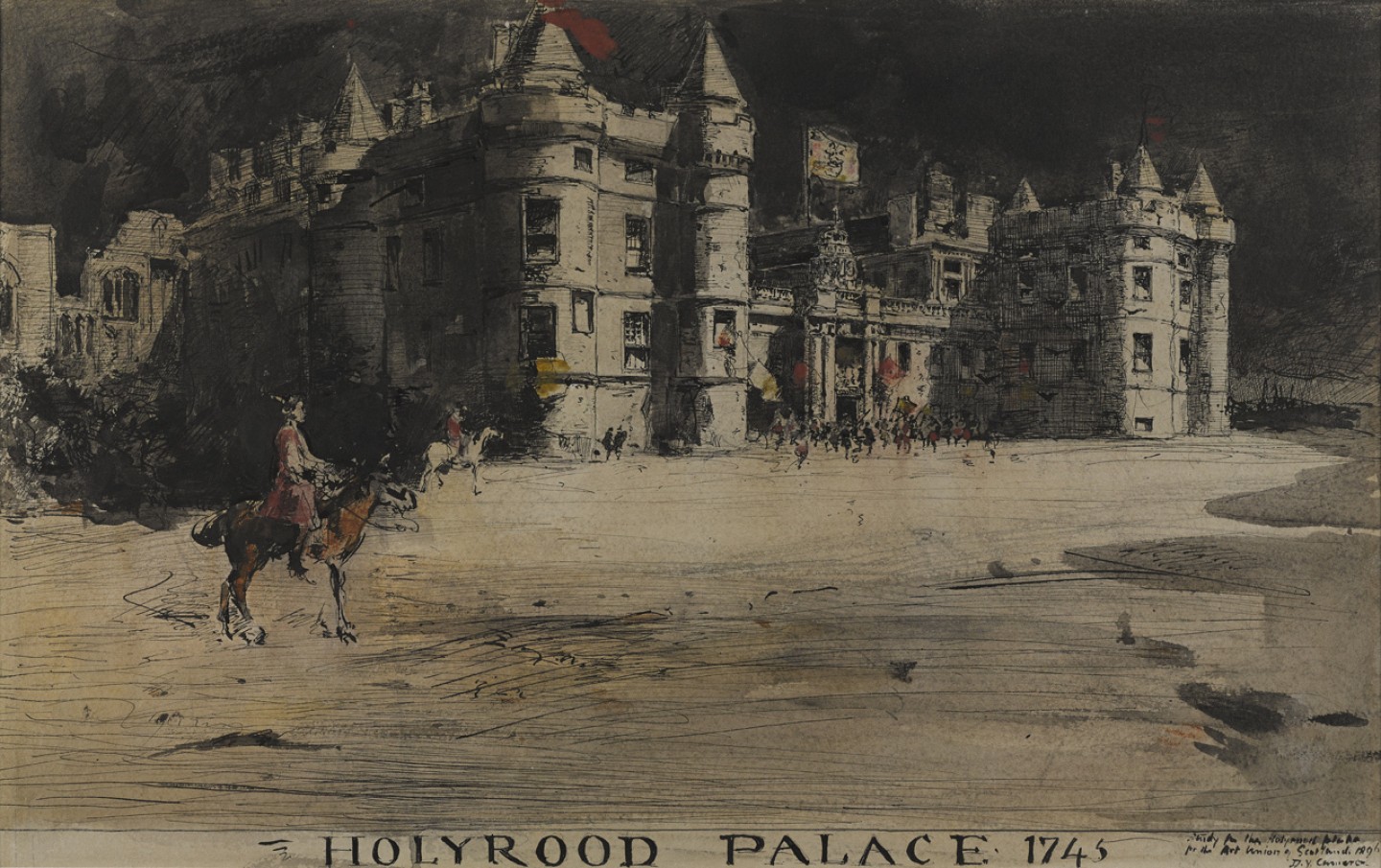
Holyrood Palace in 1745 (Etching)
David Young Cameron


DESCRIPTION
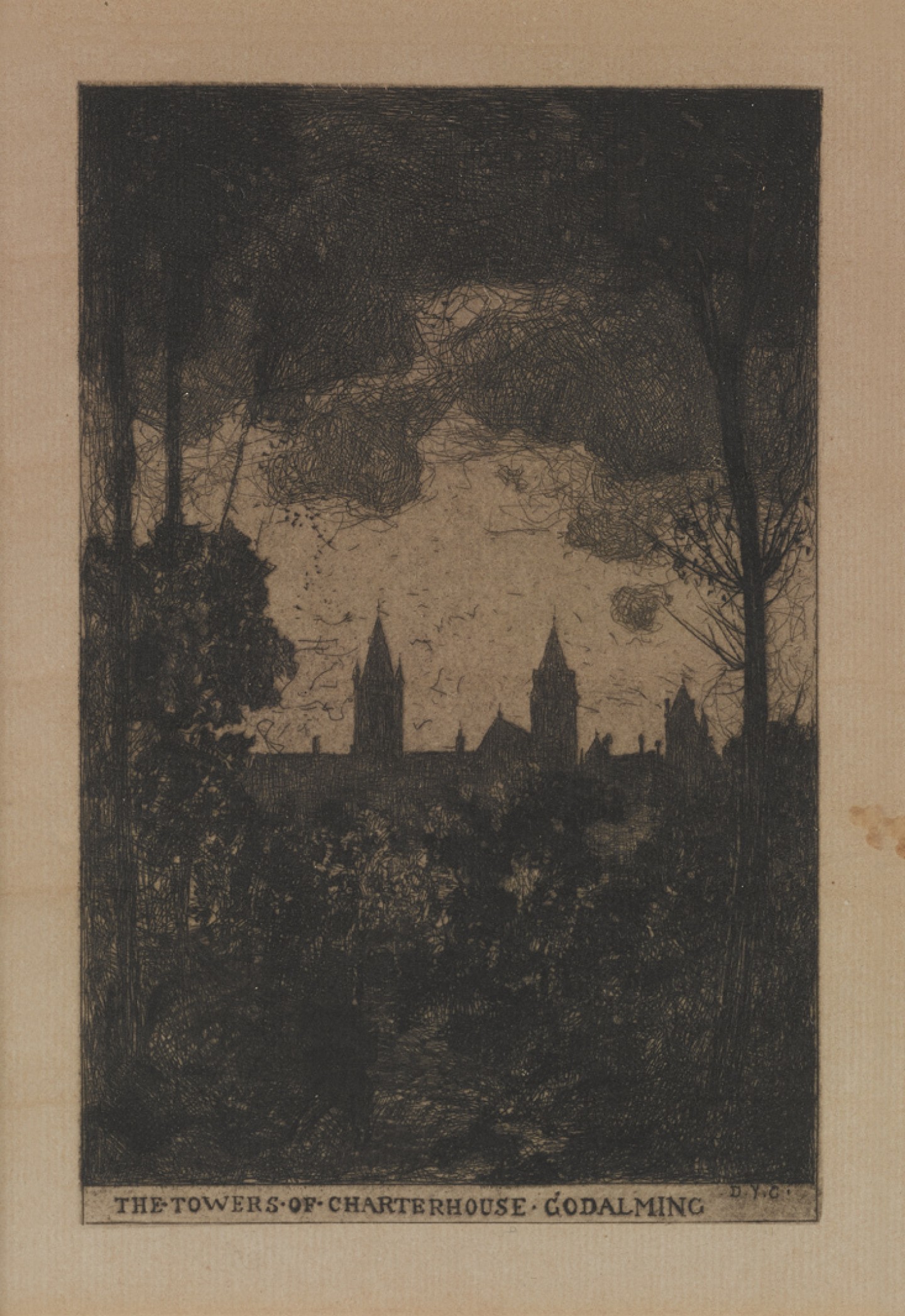
Holyrood Palace in 1745 (Etching) by David Young Cameron (1865-1945) depicts a northwestern view of Holyrood Palace with figures on horses in the foreground, one of which carries a flag and others are tipping their hats, and a group of figures are walking into the palace's entrance. Holyrood Abbey can be seen on the left side of the piece, and throughout Cameron shows his lesser known interest in capturing architecture through strong contrasts of light and dark to depict the immense detail of the palace's structure. Flags depicting the lion, representing England, can be seen flying above the palace and also in the crest at the bottom of the piece.
The reference to Culloden, shows this represents the commemoration of the Forty-Five uprising by the Scottish Jacobites, who supported Charles II 'Bonnie Prince Charlie' in his claim for the British throne under the line of Stuart, and whose rebellion was defeated in the Battle of Culloden in 1746. The two other prominent battles of Prestonpans and Falkirk are also mentioned on the crest, preceded by 'Enfinnin' which is likely meaning finally or at last, showing the celebration of the end of the uprising. The print was etched for the Art Union of Scotland's presentation plate for 1896. Cameron rose to prominence through his etching skills, with this work representing his strong skills in printmaking through the use of light and dark as well as his ability to capture architectural details. Through the 'Etching Revival' spanning 1880-1930, Cameron produced and sold many of his prints through the support of art dealers in Glasgow and Edinburgh, adding to his success as a printmaker.
DETAILS
-
Artist
David Young Cameron
-
Date
Unknown
-
Medium
Etching
-
Object number
946
-
Dimensions unframed
32.5 × 46.5 cm
-
Dimensions framed
58.5 × 71.5 × 1.5 cm
-
Place depicted
Edinburgh (2650225)
-
Subject
ARTIST PROFILE
Sir David Young Cameron RA RSA RWS RSW, 1865-1945
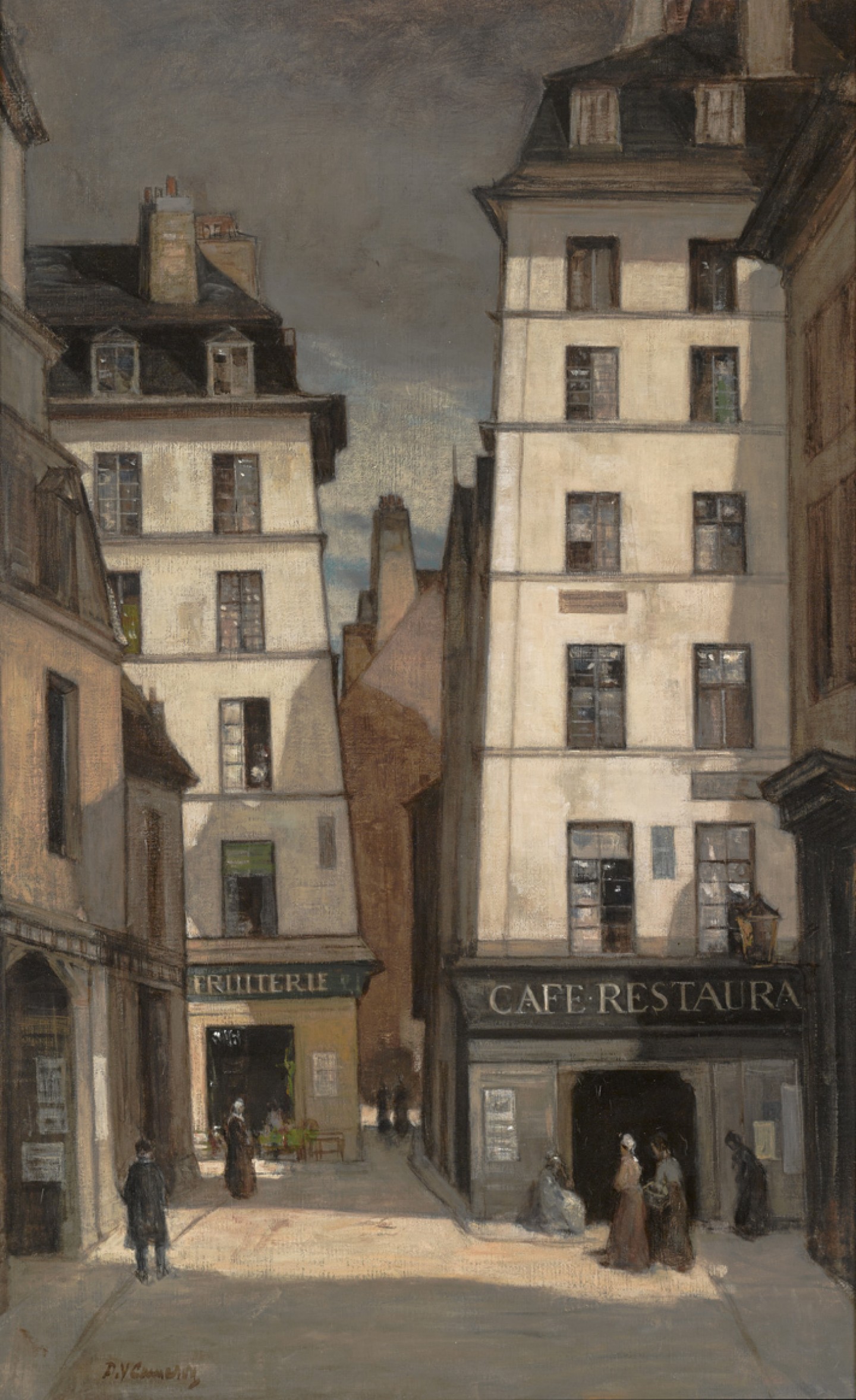
Cameron was a man of considerable importance and influence in British art circles in the 1920s and 1930s. His paintings attracted great critical acclaim and were acquired by many public art galleries in Britain and abroad. Sadly, the majority are today hidden in storerooms. Cameron's commitment to art extended well beyond the boundaries of the studio. During the second half of the First World War Cameron served as a war artist for the Canadian Government; he supervised the decoration of St. Stephen's Hall in the Houses of Parliament and of the rebuilt bank of England; he was associated with the British School in Rome for over twenty-five years; he was Trustee of the Tate Gallery and of the National Galleries of Scotland; and in 1933 he was appointed King's Painter and Limner in Scotland, an office previously held by Raeburn and Wilkie. Cameron was a son of the manse who’s deeply held religious faith was an important element throughout his life and imbued much of his work, particularly his landscapes. He devoted considerable time and energy to the Church of Scotland, advising many congregations on the redecoration of the churches.
Born in Glasgow, Cameron probably inherited his artistic ability from his mother, a talented amateur watercolourist, as did his sister, the watercolourist and etcher Katharine Cameron. While working in a Glasgow office he attended classes at Glasgow School of Art, and in 1884 he gave up office work -which he hated - in favour of painting, enrolling at Edinburgh School of Art, where fellow artists included W.M. Frazer and James Pryde.
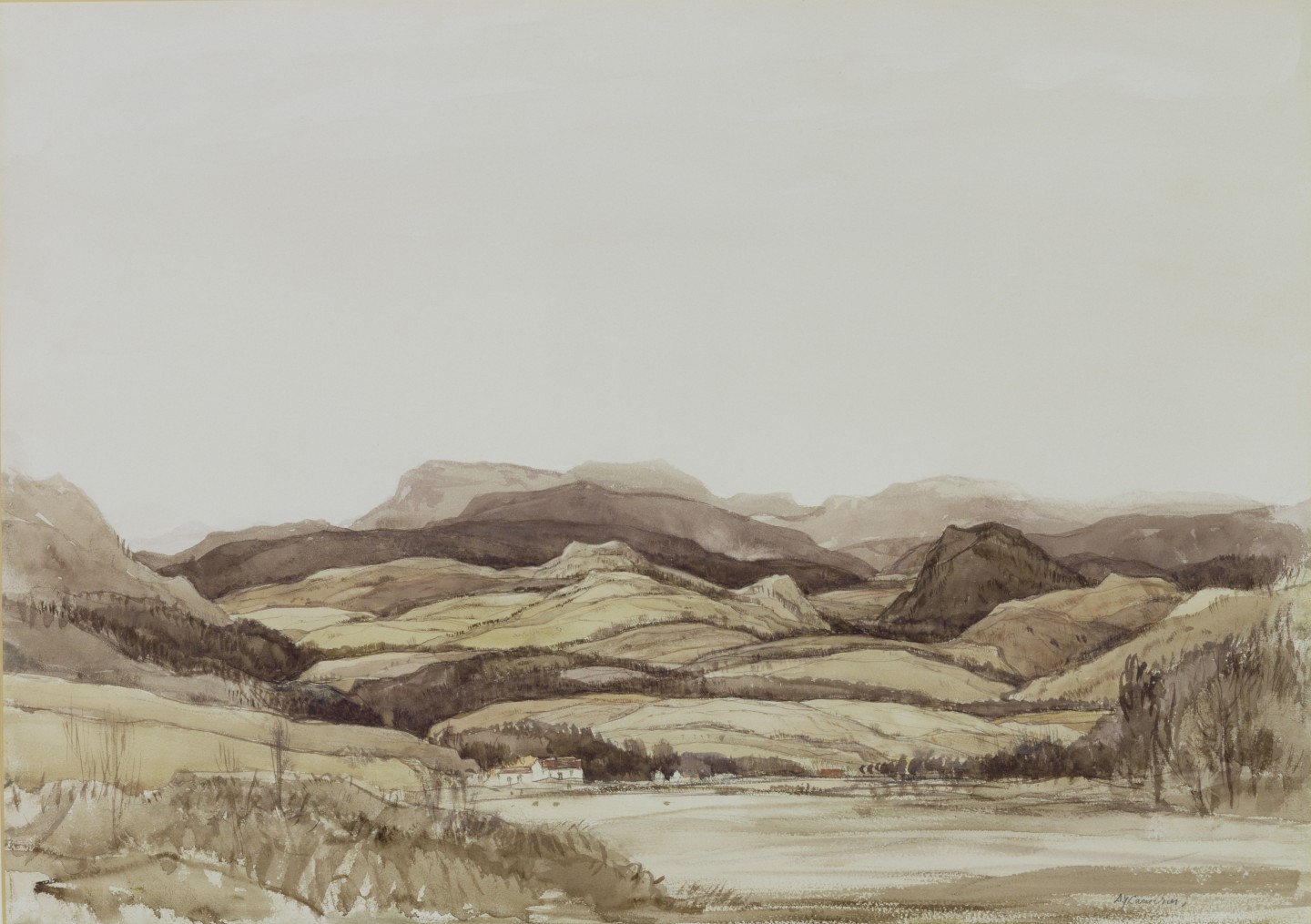
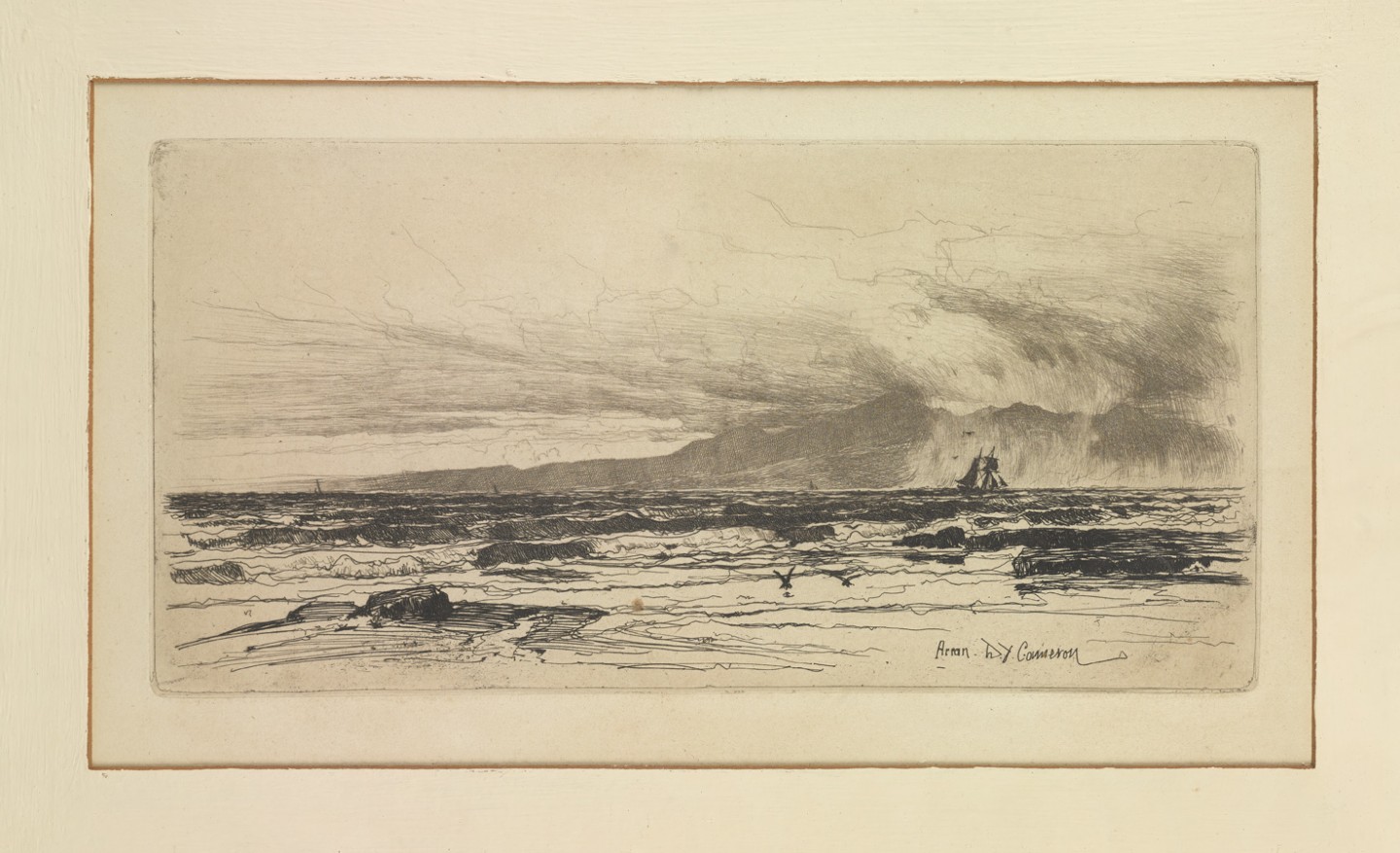
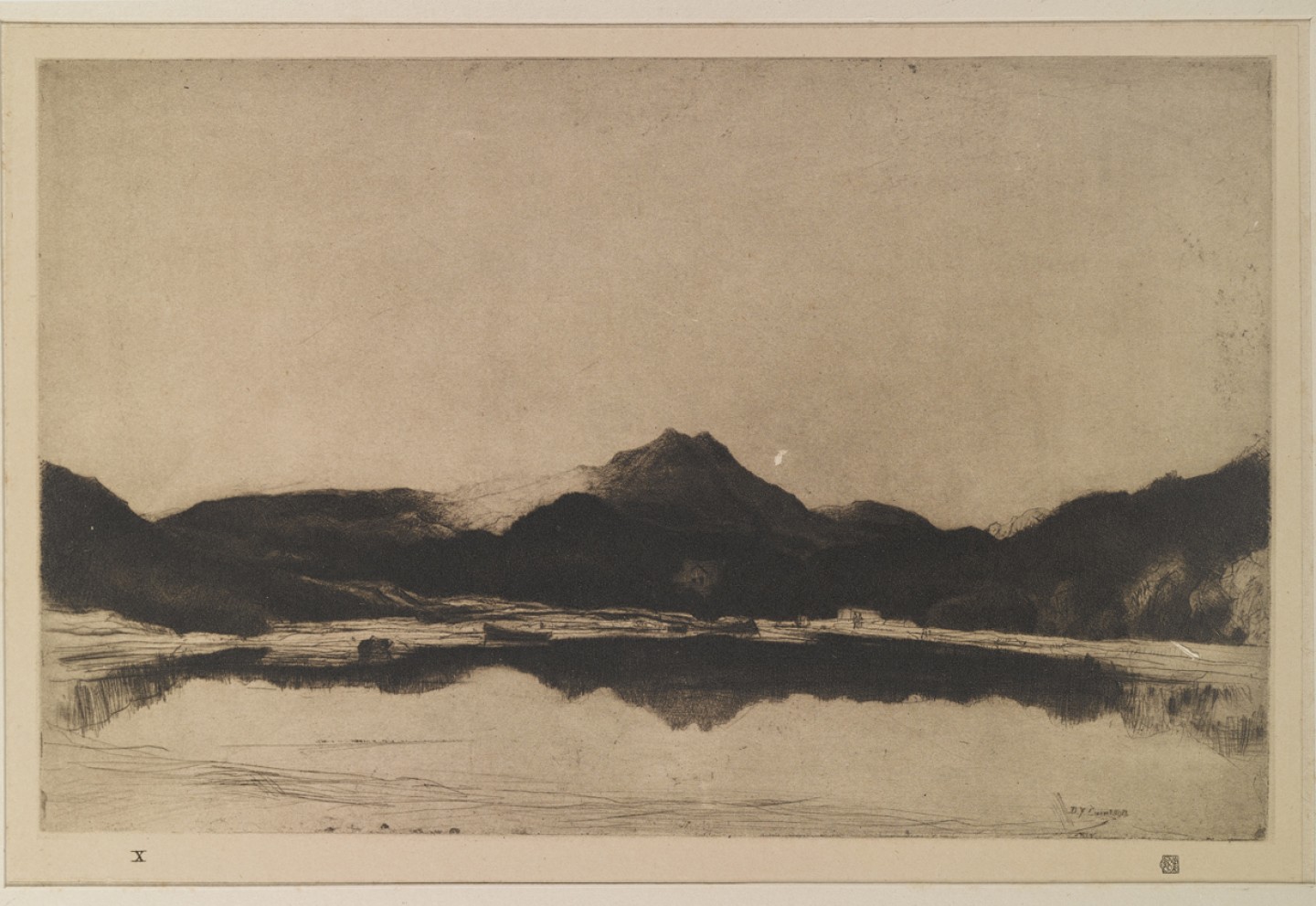
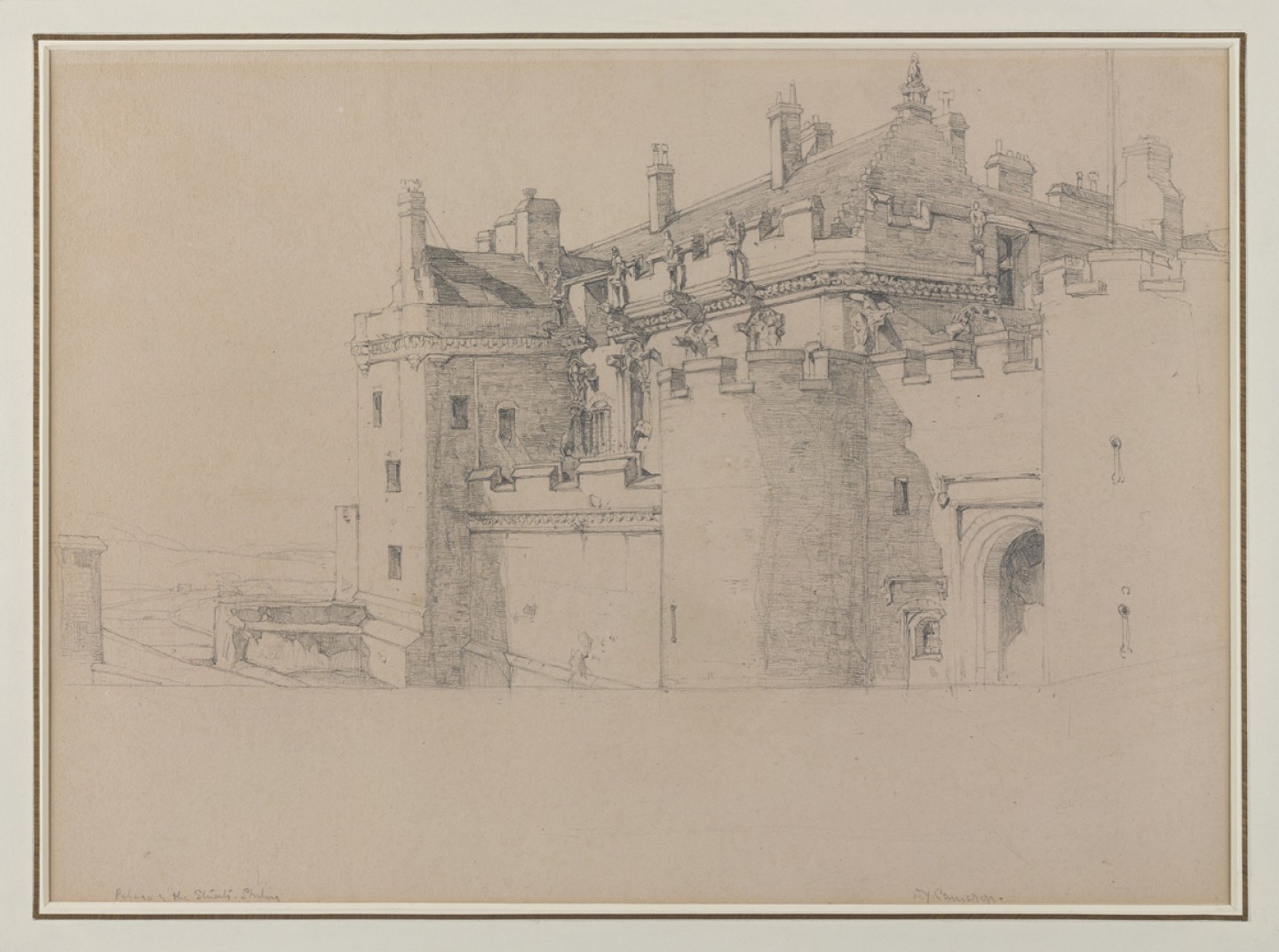
However, it was as an etcher that Cameron first came to prominence. Like Rembrandt, who was a profound influence, Cameron was a master of light and shade, whether in a landscape, a street scene or one of his atmospheric church interiors. Over a period of some forty-five years he produced about 520 etchings and drypoints, becoming, with fellow Scots Muirhead Bone and James McBey, one of the foremost British etchers of the Etching Revival of 1880-1930.
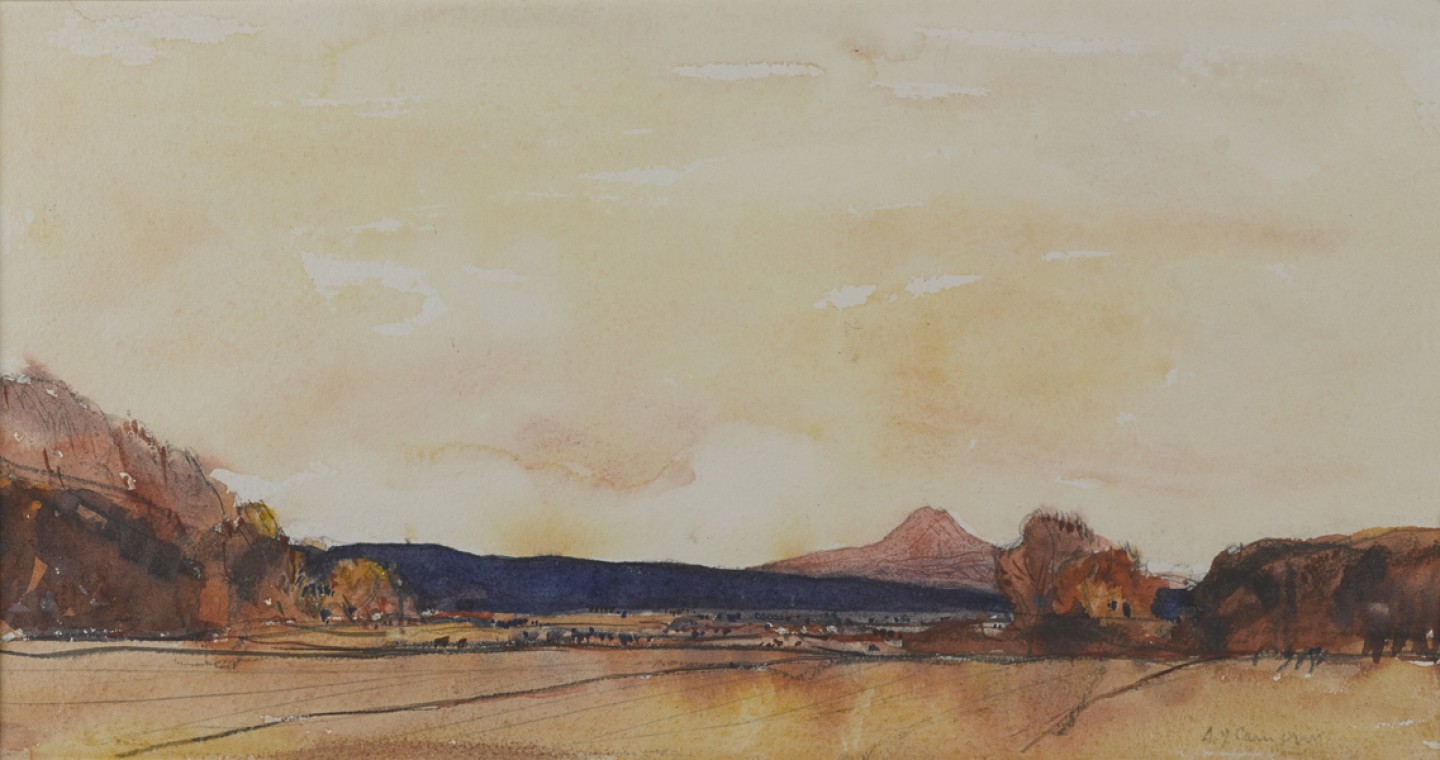
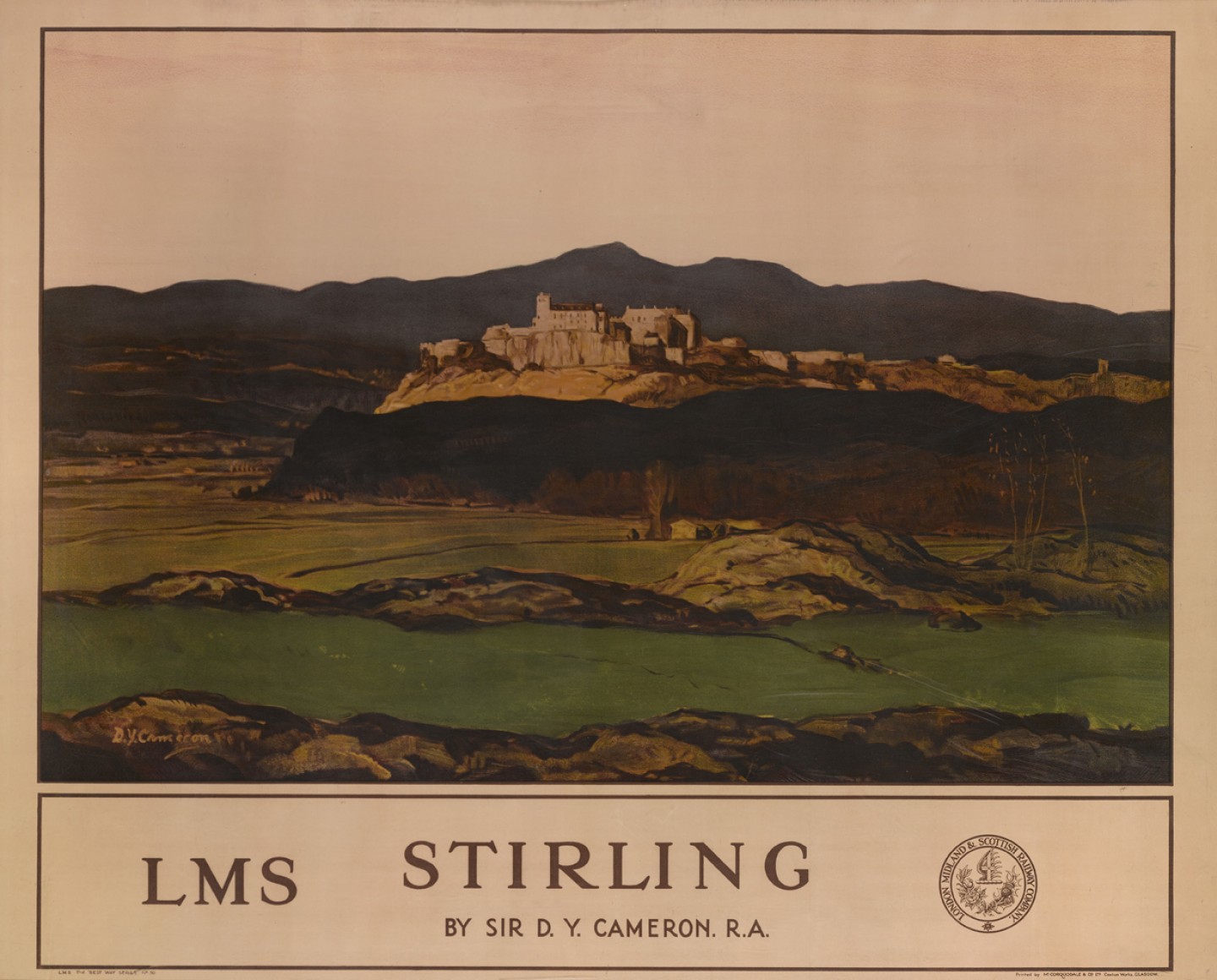
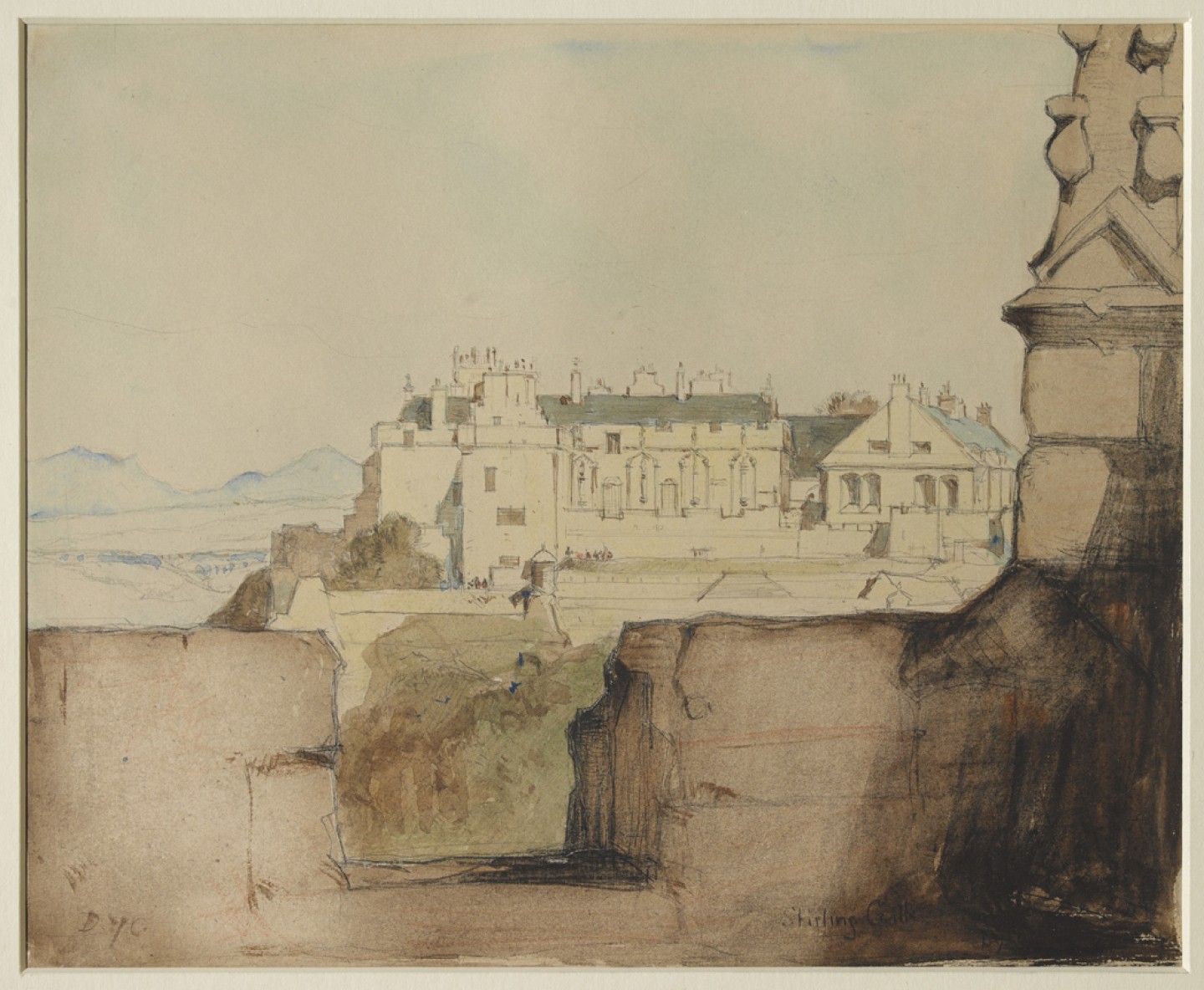
Today Cameron is remembered as a painter of the Scottish landscape. However, his oevre included figure subjects and portraits, townscapes and architectural subjects as well as landscapes. He travelled widely throughout a long working life. His oils and watercolours show a remarkable ability to convey the character and spirit of a place.