Boy Reading
Alberto Morrocco


DESCRIPTION
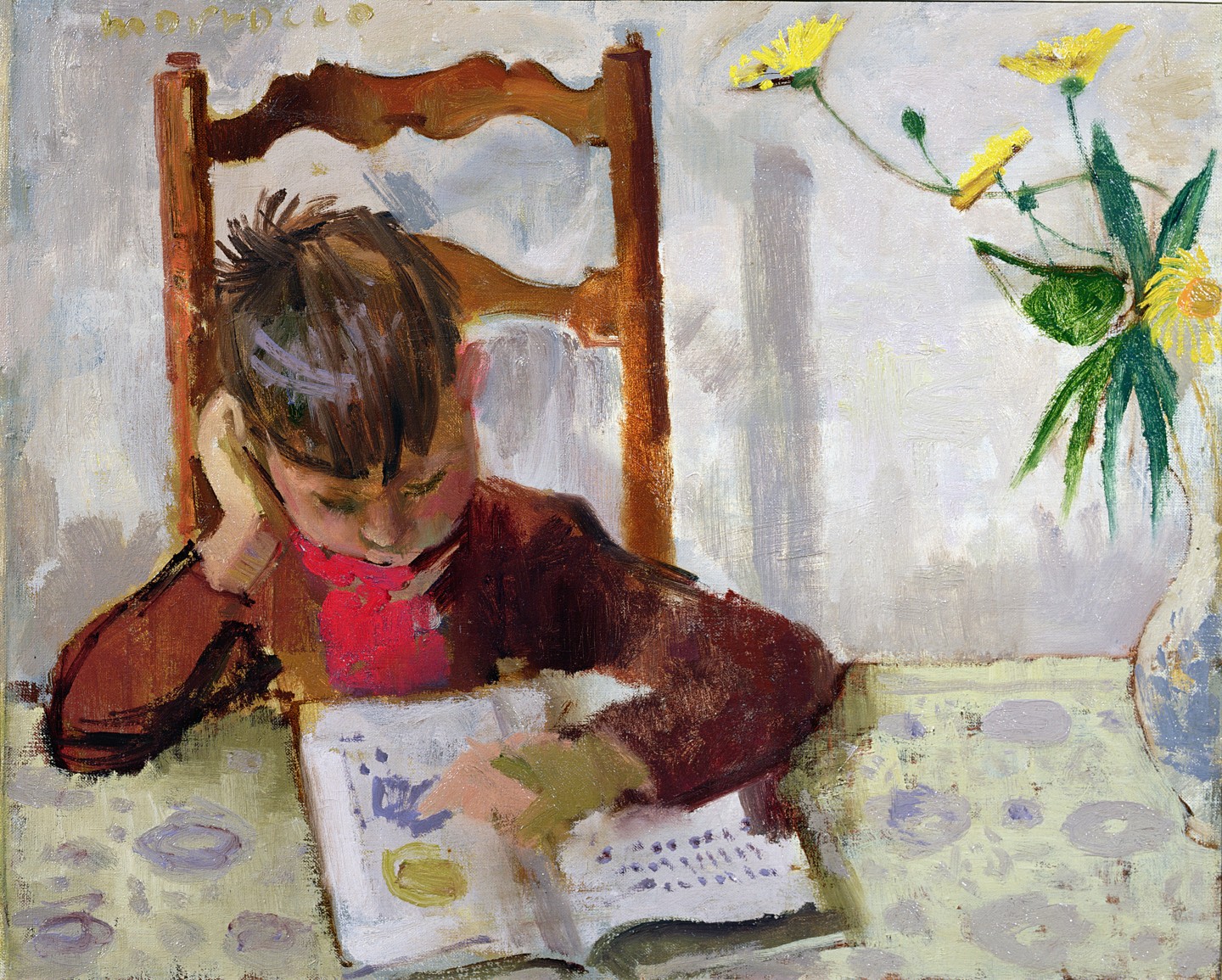
Boy Reading by Alberto Morrocco (1917-1998) presents a young boy looking at a book, with elements of still life paintings with the vase of flowers halfway in view on the side of the piece. Morrocco uses a dryer brush technique with rich colours of oil paint, creating frayed edges to the subjects depicted and the visible strokes of colour throughout the work, particularly present in the few strokes of purple paint to highlight over the boy's brown hair. This creates a softer view of the scene, blurring the details slightly to capture the intimate scene.
Morrocco's shift to vibrant colour usage that began in the 1950s is particularly prevalent in this work, with bright purple and yellow highlighting parts of the piece. He was well known for still lifes, but also was celebrated for his portraits, which this piece combines the two elements through depicting a young boy while reading and the vase of flowers off the side of the work. This may even suggest that Morrocco was originally to paint a still life of the vase alone, but decided to focus on the boy as well.
DETAILS
-
Artist
Alberto Morrocco
-
Date
1957
-
Medium
Oil on canvas
-
Object number
690
-
Dimensions unframed
46.3 × 57 cm
-
Copyright
Ⓒ The Artist's Estate. All Rights Reserved 2019/Bridgeman Images
ARTIST PROFILE
Alberto Morrocco RSA RSW RP, 1917-1998
Born in Aberdeen of Italian Parents, Morrocco studied under Robert Sivell and James Cowie at Gray's School of Art in Aberdeen from 1932 to 1938. Both tutors were to have a great influence on the stylistic development of his early painting, and Sivell's passion for Italian Renaissance art made a lasting impression on him. After war service in the army Morrocco taught part-time at Gray's School. In 1950 he was appointed Head of Painting at Duncan Jordanstone College of Art in Dundee, a post he held until he retired in 1982. During the following years he concentrated on painting and travelling.
The inspiration for many of Morrocco's paintings came from his extensive travels. In 1939, while visiting France and Switzerland on two travelling scholarships, he made numerous sketches and would refer to these for subject-matter for many years to come.
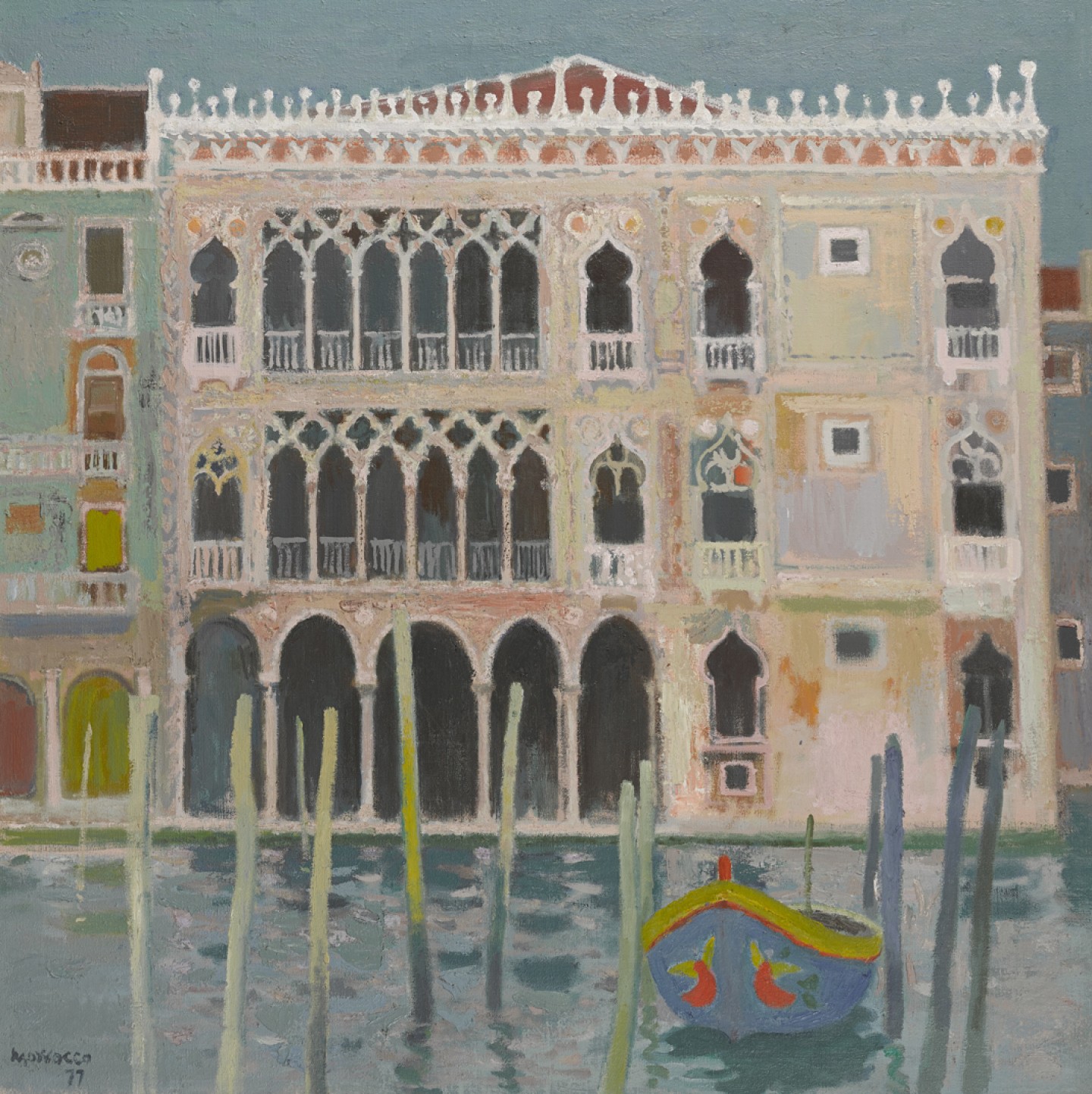
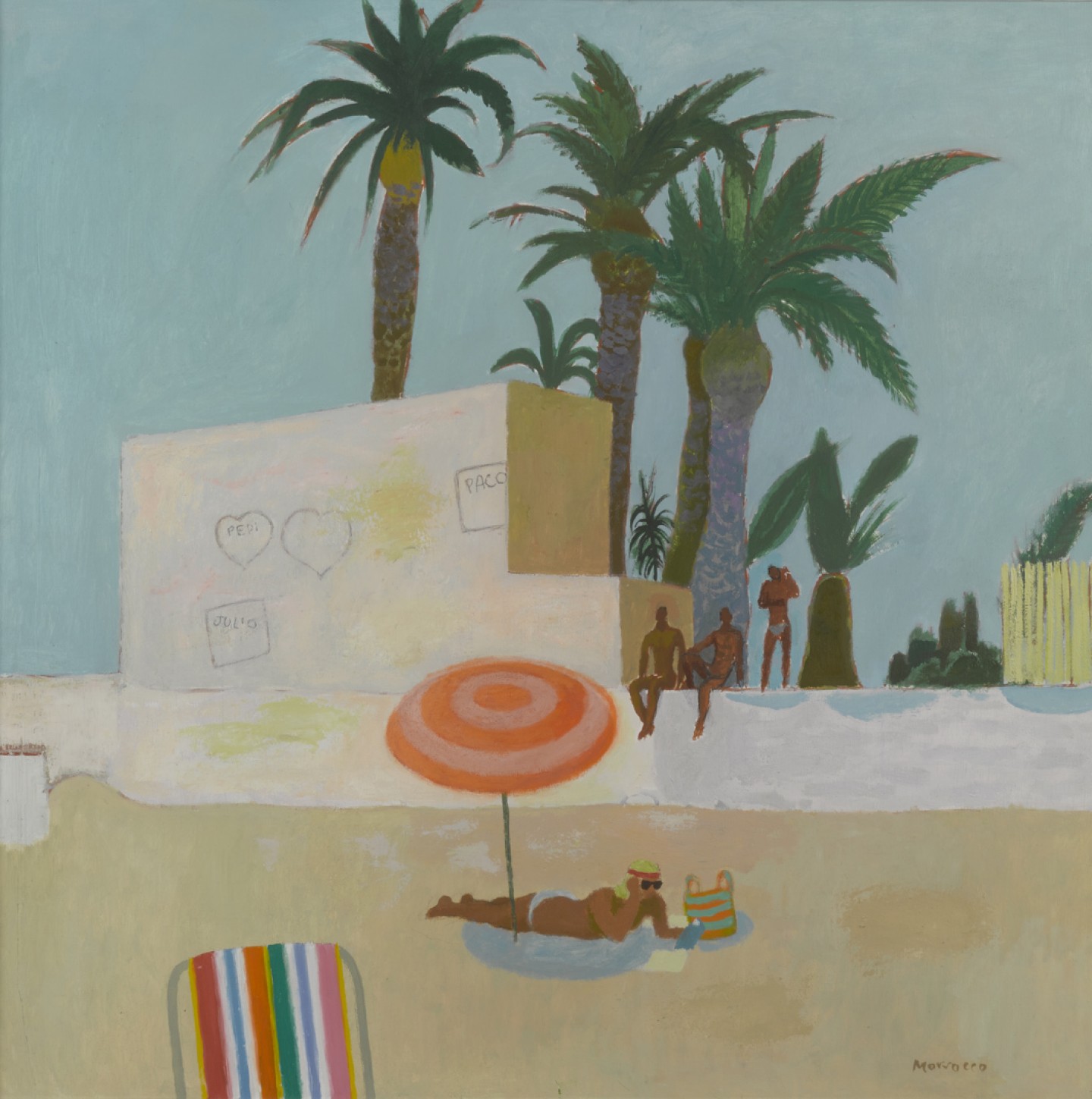
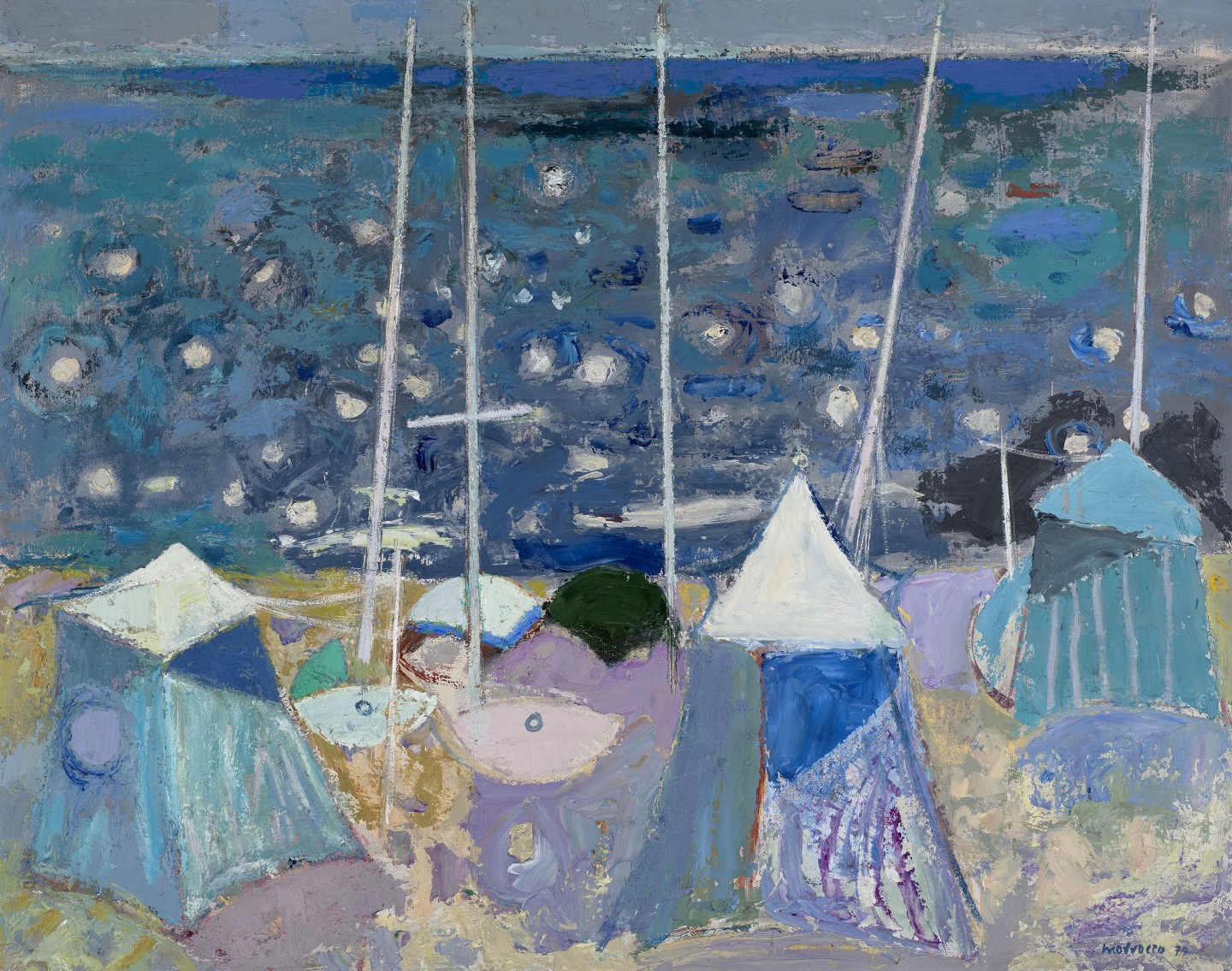
Morrocco's painting began to change in style during the 1950s, when he started to abandon his earlier muter palette and began his love affair with colour. This change was brought about by the exhibition of Vuillard and Bonnard at the Edinburgh International Festival in 1948, which was to have great impact on Morrocco and inspire his travels to the sun-soaked Mediterranean. In 1950 he went to Italy, his first visit to his parents' native country since he was a small boy. A few years later he visited Spain, and it was after this trip that he painted what was to be the first of his now famous beach scenes. He became an enthusiastic colourist, noted for his vibrant still lifes and his lively evocations of colour, warmth and fun of the Mediterranean lands, to which he would become a frequent visitor.
Although Morrocco is mainly remembered for his still lifes, he was also a successful portrait painter. A major retrospective exhibition of his work was held in 1993.